- News
- entertainment
- events
- hyderabad
- This Indian has been fighting for his right to reject religion and caste for eight years now!
Trending
This story is from January 26, 2019
This Indian has been fighting for his right to reject religion and caste for eight years now!
What’s in a name? That which we call a rose by any other name would smell as sweet...
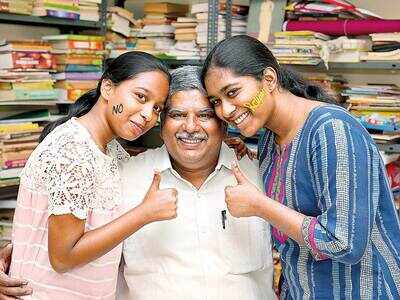
with these iconic lines from Romeo and Juliet, William Shakespeare may have rubbished the significance people attach to a name. But if The Bard had written this in India, he would have been laughed off. Because in India, even today, your name — surname in particular — is everything! It’s the most definitive indicator of your religion, caste, class and social standing. But what if someone wants to identify himself only as a human being and nothing else? Hyderabad-based DV Ramakrishna Rao is one such individual who’s been fighting a legal battle for the past eight years to claim the right to delink his identity from religion and caste.
“In our country it is impossible for an individual to claim his/her identity outside of religion. Though several High Courts have ruled that people who do not wish to disclose their caste or religion must not be forced to do so, all important forms you need to fill in a lifetime, including those by the government, still have a ‘religion’ column. You need to fill it for securing anything from birth certificates and school admissions to Class X hall tickets to passports, marriage certificates, reservations, death certificates, you name it! It’s disappointing. I think people should have the right to stake claim to an identity that’s outside the boundaries of caste and religion,” contends Ramakrishna.
Point out to him that there is the provision of ‘Others’, for those who do not wish to identify themselves with any religion or caste and he retorts saying, “But that is also prescribed under the ‘Religion’ column only. I’m saying that just like how members of the transgender community have the option of choosing ‘third gender’ in the ‘sex’ column, non-religious people should be given the right to be categorised accurately.” For Rao, this is not something that just makes for an interesting debate. It’s something he’s been fighting for, legally.

In the interim, the High Court proclaimed: “Right to have religion means equally not to have any religion also.” “The justice ordered the AP and central government to respond to the PIL with in 15 days. But they are yet to respond,” rues Rao. Interestingly, Rao isn’t the only one waiting. there are many like him in the country who are hoping that the PIL will give them the right to reject religion. According to the 2011 census, there are 28.7 lakh citizens who didn’t specify their religion in India. “Around the world, there are 120 crore people who aren’t following any religion and they amount to 16 per cent of the world population. The count is increasing rapidly,” says Rao, smiling.
Right to freedom of religion is one of six fundamental rights the Constitution grants every citizen of India. It allows every Indian the right to follow their own beliefs in matters of faith and morality. However, non believers who don’t wish to be associated with any particular religion or caste find it almost impossible to just be recognised as just human beings. Rao discovered this only after moving to Andhra Pradesh from Orissa to pursue B.SC Agriculture in Bapatla Agricultural College. “My father was a Railway employee and I grew up in Orissa, in an environment where people of all castes and religions happily co-existed. But when I came to AP for my higher studies, the ugly truth about caste politics left me flaberghasted,” he recalls.
It got him thinking and he began to read more about religion. The more he read, the more convinced he became that he didn’t want to be associated with any religion. And then he fell in love with a Christian girl, Clarance Krupalini. “I was born in an orthodox Hindu family so naturally my marriage to Clarance was met with stiff opposition. We had to wait for a while to win my parents’ approval. Eventually, my parents gave in and we got married. Even though Clarance is religious, we respect each other’s beliefs in a democratic way,” he shares.
Rao, however, wanted his children to grow up without having to worry about religion. “Just because I was born to Hindu parents, I too became a Hindu by default. I did not have a say in the matter of my own faith. This has to change, children need to be able to choose for themselves,” he contends. An online petition started by him has got only a little over 6000 signatures. But he is ready for a long fight. “There are many people who are struggling like us around the country; we want to make all of them file petitions,” he says, signing off.
with these iconic lines from Romeo and Juliet, William Shakespeare may have rubbished the significance people attach to a name. But if The Bard had written this in India, he would have been laughed off. Because in India, even today, your name — surname in particular — is everything! It’s the most definitive indicator of your religion, caste, class and social standing.
“In our country it is impossible for an individual to claim his/her identity outside of religion. Though several High Courts have ruled that people who do not wish to disclose their caste or religion must not be forced to do so, all important forms you need to fill in a lifetime, including those by the government, still have a ‘religion’ column. You need to fill it for securing anything from birth certificates and school admissions to Class X hall tickets to passports, marriage certificates, reservations, death certificates, you name it! It’s disappointing. I think people should have the right to stake claim to an identity that’s outside the boundaries of caste and religion,” contends Ramakrishna.
Point out to him that there is the provision of ‘Others’, for those who do not wish to identify themselves with any religion or caste and he retorts saying, “But that is also prescribed under the ‘Religion’ column only. I’m saying that just like how members of the transgender community have the option of choosing ‘third gender’ in the ‘sex’ column, non-religious people should be given the right to be categorised accurately.” For Rao, this is not something that just makes for an interesting debate. It’s something he’s been fighting for, legally.
It was in April 2010 that he first filed a PIL seeking the inclusion of a new option “No Religion, No Caste” in all government documents. The desire to raise his daughters as non-believers, until they are old enough to decide for themselves, was what led him to seek legal recourse. “My daughter Sahaja was all set to join school. But the authorities insisted on mentioning the religion of any one parent in the form. That’s something we were dead against. We approached many officers and organisations, but to no avail. So we filed a writ petition in the High Court with the help of our friend D Suresh Kumar, who is also a lawyer,” he says.
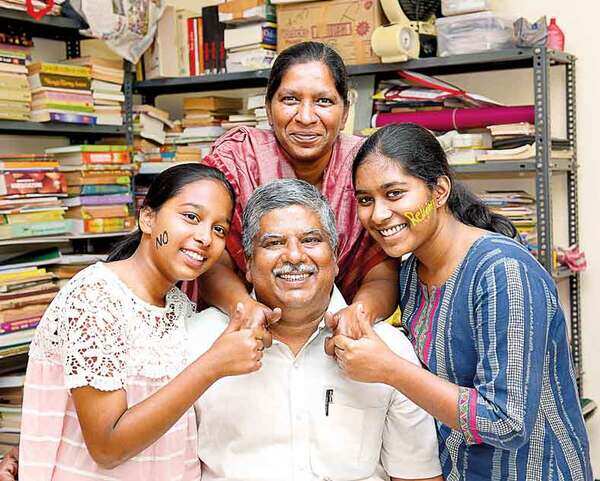
In the interim, the High Court proclaimed: “Right to have religion means equally not to have any religion also.” “The justice ordered the AP and central government to respond to the PIL with in 15 days. But they are yet to respond,” rues Rao. Interestingly, Rao isn’t the only one waiting. there are many like him in the country who are hoping that the PIL will give them the right to reject religion. According to the 2011 census, there are 28.7 lakh citizens who didn’t specify their religion in India. “Around the world, there are 120 crore people who aren’t following any religion and they amount to 16 per cent of the world population. The count is increasing rapidly,” says Rao, smiling.
Right to freedom of religion is one of six fundamental rights the Constitution grants every citizen of India. It allows every Indian the right to follow their own beliefs in matters of faith and morality. However, non believers who don’t wish to be associated with any particular religion or caste find it almost impossible to just be recognised as just human beings. Rao discovered this only after moving to Andhra Pradesh from Orissa to pursue B.SC Agriculture in Bapatla Agricultural College. “My father was a Railway employee and I grew up in Orissa, in an environment where people of all castes and religions happily co-existed. But when I came to AP for my higher studies, the ugly truth about caste politics left me flaberghasted,” he recalls.
It got him thinking and he began to read more about religion. The more he read, the more convinced he became that he didn’t want to be associated with any religion. And then he fell in love with a Christian girl, Clarance Krupalini. “I was born in an orthodox Hindu family so naturally my marriage to Clarance was met with stiff opposition. We had to wait for a while to win my parents’ approval. Eventually, my parents gave in and we got married. Even though Clarance is religious, we respect each other’s beliefs in a democratic way,” he shares.
Rao, however, wanted his children to grow up without having to worry about religion. “Just because I was born to Hindu parents, I too became a Hindu by default. I did not have a say in the matter of my own faith. This has to change, children need to be able to choose for themselves,” he contends. An online petition started by him has got only a little over 6000 signatures. But he is ready for a long fight. “There are many people who are struggling like us around the country; we want to make all of them file petitions,” he says, signing off.
End of Article
FOLLOW US ON SOCIAL MEDIA







Photostories
entertainment videos
Featured In Movies
Popular Categories
Entertainment NewsBollywood NewsTollywood NewsKollywood NewsMollywood NewsMovie ReviewsLatest Hindi MoviesLatest Tamil MoviesMX PlayerParenting TipsHome RemediesWeight LossBeauty TipsParenting TipsHindi VideosHindi Video SongsBhojpuri Music VideosLatest Telugu MoviesBhojpuri Music VideoHindi TV News
Trending in Entertainment
Latest MoviesBollywood MoviesHollywood MoviesTamil Movies 2024Telugu Movies 2024Malayalam Movies 2024Kannada Movies 2024Marathi Movies 2024Bengali Movies 2024Top Rated Movies 2024Best Hindi MoviesBest English MoviesBest Telugu MoviesBest Tamil MoviesBest Malayalam MoviesBest Kannada MoviesBest Bengali MoviesUpcoming Hindi MoviesBest Movies Of All TimeBest Hindi Movies of All Time
Trending in Etimes
Horoscope TodayNumerology Predictions TodayKamala HarrisRobert F Kennedy JrBarron TrumpElon MuskAnna Paulina LunaJustin TrudeauTrump Town Hall Key TakeawaysInternational Day of PeaceDonald TrumpSNL 50 SeasonKamala HarrisSituationship TipsUsha UthupRelationship TipsSean Diddy CombsMiley CyrusJennifer Lopez
Trending in TV
Trending in Lifestyle
Trending in Regional
Movie Reviews
Yudhra ReviewJo Tera Hai Woh Mera Hai ReviewKahan Shuru Kahan Khatam ReviewHis Three Daughters ReviewNever Let Go ReviewDancing Village: The Curse Begins ReviewTransformers One ReviewFirst Love ReviewBerlin ReviewThe Buckingham Murders ReviewSpeak No Evil ReviewVisfot ReviewThalapathy Is The G.O.A.T ReviewRebel Ridge Review
Upcoming Hindi Movies
Upcoming Regional Movies
Latest News
EC team in Jharkhand to review poll preparednessElon Musk's SpaceX to send uncrewed Starships to Mars by 2026: “One of my biggest concerns right now..”Ghosts Season 4: Premiere date, plot, and cast revealedWhat is the 30-30-30 weight loss method? How to do it for maximum benefits?Mom's everyday tips were a must for golden boy D GukeshYudhra Box Office: Siddhant Chaturvedi starrer earns only Rs 8.60 crore over the weekendKaun Banega Crorepati 16: Amitabh Bachchan praises Ujjwal’s resilience as he attempts the 1 Crore questionGen-Z slang words explained: 30 terms you need to knowThe truth about sugar substitutes: Safe alternative or hidden health risk?Decomposed body of civil services aspirant found in DelhiGemini, Daily Horoscope Today, September 23, 2024: Face financial strain today with expenses outpacing incomePisces, Daily Horoscope Today, September 23, 2024: Day marked by restlessness and a need for changeNolan Gould would make personalized ornaments for Modern Family castmates and crew each ChristmasKartik Aaryan and Karisma Kapoor capture hearts with their cute selfie momentSri Simha and Satya starrer comedy drama, 'Mathu Vadalara 2' mints 1 million dollars at US office“That's the dirtiest s**t I ever saw in football”: C.J. Gardner-Johnson on Khristian Boyd as his hit left DeVonta Smith concussedGwen Stefani shares stunning pictures with Dua Lipa, calls her "prettiest girl"Dating scam: How a woman lost Rs 3.37 lakh in 'friendship fraud' on Tinder and was saved from further loss
Other Group Sites -
ETimes is an Entertainment, TV & Lifestyle industrys promotional website and carries advertorials and native advertising.